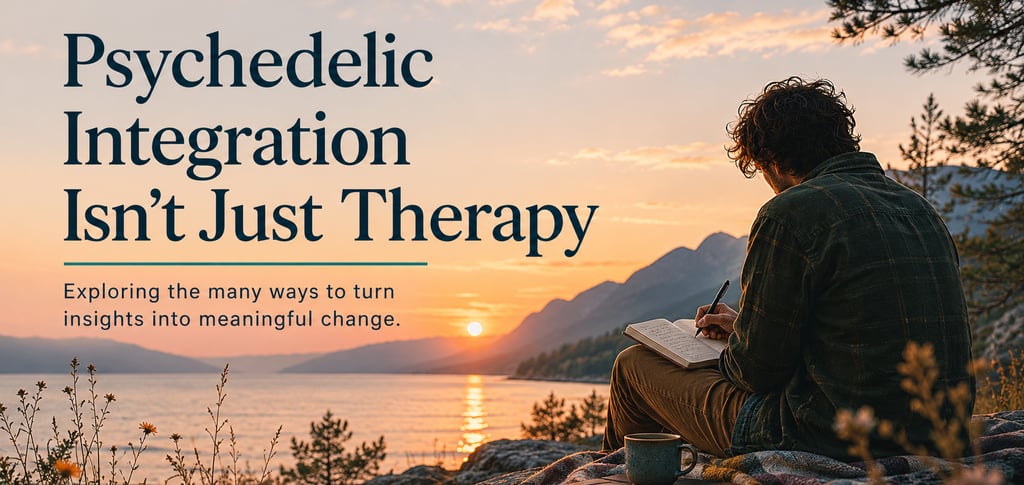
Psychedelic Integration Isn't Just Therapy
Over the past few years, I've spent a lot of time exploring psychedelic integration resources. Research papers, books, training videos, workbooks, and conversations with people who have spent years thinking about this work. One thing I've come to appreciate is how expansive the concept of integration really is.
I recently came across a paper by Bathje et al. (2022) that summarized integration practices found throughout the psychedelic literature. As I read through the list, I found myself smiling. The list included journaling, music, drumming, hiking, meditation, therapy, community participation, boundary setting, creative expression, spiritual practice, time in nature, and many other approaches.
What I appreciated most was seeing integration reflected in ordinary life.
The list reminded me that integration is not a single technique. It's a relationship with an experience. It's the process of listening, reflecting, experimenting, and gradually bringing insights into the way we live.
I was also recently watching a integration training with Marc Aixalà. He spoke about the importance of being careful not to gatekeep integration. That idea has stayed with me.
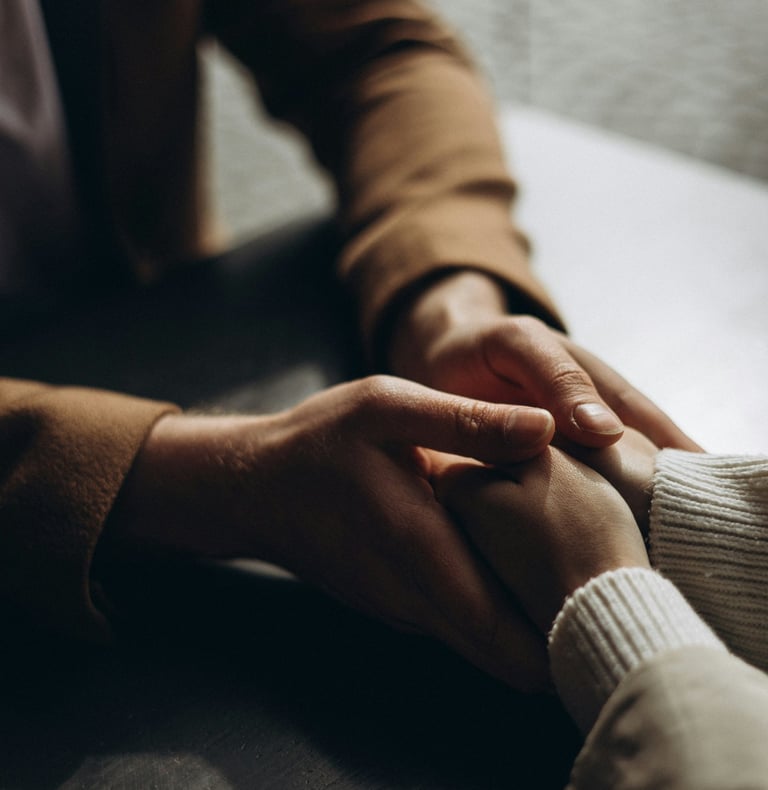
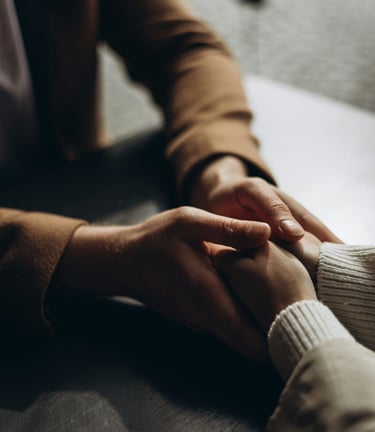
Therapy has an important place within integration. It can provide a space for reflection, emotional processing, meaning-making, and accountability. A therapist can help someone explore what emerged during an experience and collaborate on practical ways of carrying those insights forward.
At the same time, integration often unfolds through the activities that make up daily life.
When I think about my own integration process, it has included writing; pages of journaling, reflections, and creative ideas. It has also included making music and spending time with a drum set. I spent time on long walks, hiking trails, scanning my body, and having conversations with friends, personal therapy, group therapy, and learning where healthier boundaries were needed.
Looking back, many of those experiences appear throughout the integration literature. Walking in nature, creative expression, mindfulness practices, therapeutic support, community, and relationships all show up as meaningful pathways for integration.
What I find encouraging is that this broader perspective creates room for people to discover what works for them.
Some people process through conversation. Others process through movement. Some people are drawn toward art, music, spirituality, meditation, or community. Many people combine several approaches over time. Integration can be deeply personal while still benefiting from guidance and support.
This is also how I approach psychedelic integration therapy with clients.
My role is not to provide a definitive explanation for someone's experience. My role is to create a space where curiosity, reflection, and meaning-making can unfold. Together, we can explore different perspectives, psychological, relational, developmental, somatic, symbolic, or spiritual, and discover which frameworks feel most useful.
I have always appreciated the term holotropic states because it points toward experiences that move us toward wholeness. Sometimes those experiences are beautiful. Sometimes they are challenging. Often they contain elements of both. In either case, they can open conversations about who we are, how we relate to others, and how we want to live.
For anyone looking for integration resources, I wanted to share this list because it captures something important. Integration can happen in many places. Therapy is one of those places. Writing can be another. Music can be another. Nature can be another. Community can be another.
What matters most is finding practices that help transform an experience into something lived, embodied, and meaningful.