Psychedelic Integration for First Responders in Ontario | Virtual Therapy Support
Explore psychedelic integration therapy for first responders in Ontario. Support for firefighters, paramedics, police officers, veterans, and emergency personnel processing psychedelic experiences, trauma, stress, and PTSD symptoms.
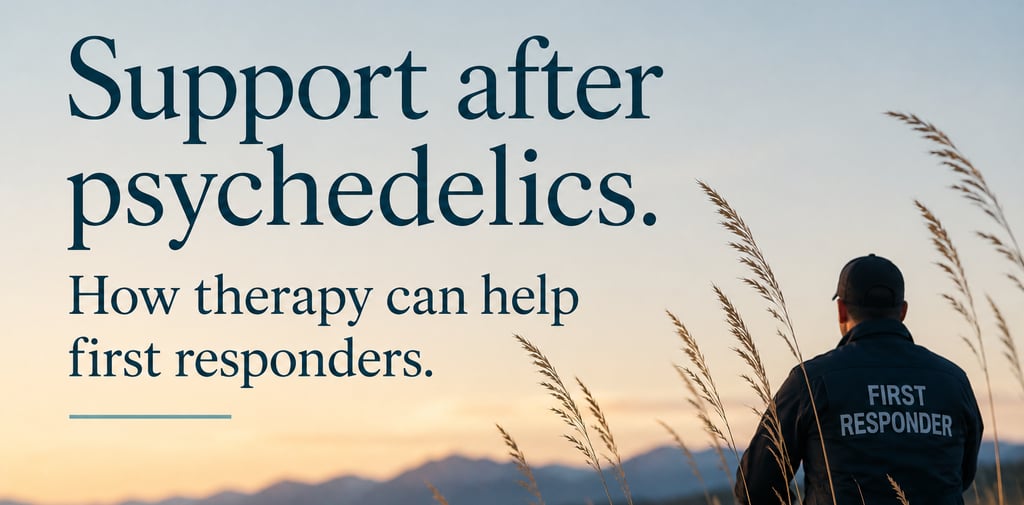
Why More First Responders Are Exploring Psychedelics
First responders are exposed to stress and trauma that most people will never fully understand. Firefighters, paramedics, police officers, veterans, nurses, and emergency personnel often spend years operating in high-pressure environments where emotional suppression becomes part of survival.
Over time, that constant exposure can affect the nervous system in significant ways. Many first responders struggle with anxiety, hypervigilance, emotional numbness, burnout, sleep issues, relationship difficulties, chronic stress, PTSD symptoms, or feeling emotionally disconnected long after a shift ends.
Research consistently shows that first responders experience higher rates of PTSD, depression, anxiety, and substance use compared to the general population.
As conversations around mental health continue to evolve, more first responders are becoming interested in psychedelic-assisted therapy and psychedelic integration therapy as potential tools for healing, emotional processing, and nervous system recovery.
Psychedelics and First Responder Mental Health
In a recent study exploring first responders and psychedelic-assisted therapy, many participants reported interest in therapies involving psychedelics such as LSD, psilocybin, and MDMA.
The study also found that many first responders reported feeling dissatisfied with traditional mental health treatment approaches. While over half had sought professional treatment, only a small percentage felt confident it was truly helping them.
This does not mean traditional therapy cannot help. It means many first responders are still searching for approaches that feel deeper, more emotionally accessible, and more effective for trauma, stress, and emotional shutdown.
Some first responders report that psychedelic experiences helped them reconnect with emotions they had suppressed for years. Others describe moments of clarity, emotional release, increased self-awareness, or a renewed sense of connection to themselves and the people around them.
But psychedelic experiences alone are not always enough.
That is where psychedelic integration therapy becomes important.
What Is Psychedelic Integration Therapy?
Psychedelic integration therapy is a form of psychotherapy that helps people process and make sense of psychedelic experiences afterward.
A psychedelic experience can sometimes bring unresolved emotions, traumatic memories, grief, fear, shame, or relationship wounds to the surface very quickly. For first responders especially, years of accumulated stress and emotional suppression may suddenly emerge all at once.
Without support, some people are left wondering:
Why did that experience affect me so deeply?
Why am I suddenly emotional afterward?
Why do I feel disconnected or overwhelmed now?
What do I do with the insights that came up?
How do I turn this into real change?
Integration therapy helps bridge the gap between the experience itself and long-term healing.
Rather than focusing only on the psychedelic experience, integration focuses on helping someone safely process emotions, understand patterns, regulate the nervous system, and apply insights in meaningful ways to everyday life.
Why Psychedelic Integration Matters for First Responders
Many first responders become highly skilled at functioning under pressure. On the job, emotional shutdown can sometimes become adaptive. It helps people keep moving during crisis situations.
But eventually, the nervous system can become stuck in survival mode.
Psychedelic experiences may temporarily lower emotional defenses, allowing suppressed emotions or unresolved trauma to surface. While this can sometimes feel relieving or meaningful, it can also feel confusing, destabilizing, emotionally intense, or difficult to process alone.
This is one reason psychedelic integration support can be so valuable for first responders.
Integration therapy offers a grounded and confidential space to explore what surfaced without judgment. Therapy may involve emotional processing, nervous system regulation, trauma-informed therapy, mindfulness, EMDR, meaning-making, or simply slowing down enough to understand what the experience brought forward.
The goal is not to endlessly analyze the psychedelic experience itself.
The goal is lasting change.
PTSD, Trauma, and Psychedelic Integration
Many first responders live with chronic nervous system activation for years before fully recognizing the impact it has had on them.
Research has found elevated rates of PTSD symptoms, occupational stress injuries, anxiety disorders, depression, and functional impairment among first responders.
Trauma does not always look dramatic from the outside. Sometimes it shows up as emotional numbness, irritability, relationship difficulties, avoidance, overworking, poor sleep, panic, feeling disconnected from family, or difficulty relaxing even when off duty.
Psychedelic integration therapy creates space to work with these experiences slowly and safely.
For some people, the work involves understanding trauma patterns. For others, it involves reconnecting with emotions, rebuilding trust in themselves, improving relationships, or learning how to feel grounded again after years of chronic stress exposure.
Psychedelic Therapy for Firefighters, Police, Paramedics, and Veterans
Interest in psychedelic therapy among firefighters, paramedics, police officers, and veterans continues to grow. Many are seeking support for PTSD symptoms, anxiety, burnout, emotional exhaustion, grief, and chronic stress.
At the same time, confidentiality, stigma, career concerns, and fear of judgment remain major barriers to seeking support.
A supportive therapeutic relationship matters.
Many first responders want a space where they do not have to explain or justify the emotional impact of what they have experienced. Integration therapy can provide a place to slow down, process experiences honestly, and explore healing without pressure or performance.
Virtual Psychedelic Integration Therapy in Ontario
I offer virtual psychedelic integration therapy for first responders across Ontario, including firefighters, paramedics, police officers, veterans, healthcare workers, and emergency personnel.
Therapy is collaborative, grounded, and trauma-informed. Sessions focus on helping you process experiences safely, understand what surfaced, regulate the nervous system, and begin creating meaningful changes that extend beyond the psychedelic experience itself.
You do not need to have everything figured out before reaching out.
If you are a first responder who has explored psychedelics and are looking for support afterward, therapy may help you process the experience and turn insight into lasting change.
Individual Virtual Therapy
Individual psychotherapy supports self-understanding and lasting change. We explore thoughts, emotions, behaviours, and relational patterns, including integration of psychedelic experiences when relevant.


$ 125 per hour
(Insurance Eligible)
Schedule a free consultation
If you have questions or are new to psychedelic integration therapy, a free consultation is a simple place to start. We can talk through your experience, what you’re looking for, and whether this feels like a good fit.
Begin with a conversation
How to get started
Serving clients across Ontario, including Toronto, Ottawa, Mississauga, Brampton, Hamilton, and other major cities through virtual sessions.
integrationontario@protonmail.com
Psychedelic Integration Ontario (2026)


Important: This practice does not provide psychedelic substances.
Services are limited to psychotherapy, preparation, journey resources and integration support related to psychedelic experiences.
This website does not provide emergency services. If you are in crisis or need immediate help, call 911 or contact Talk Suicide Canada at 1-833-456-4566.